How to Calculate Horsepower for Continuous vs Intermittent Loads
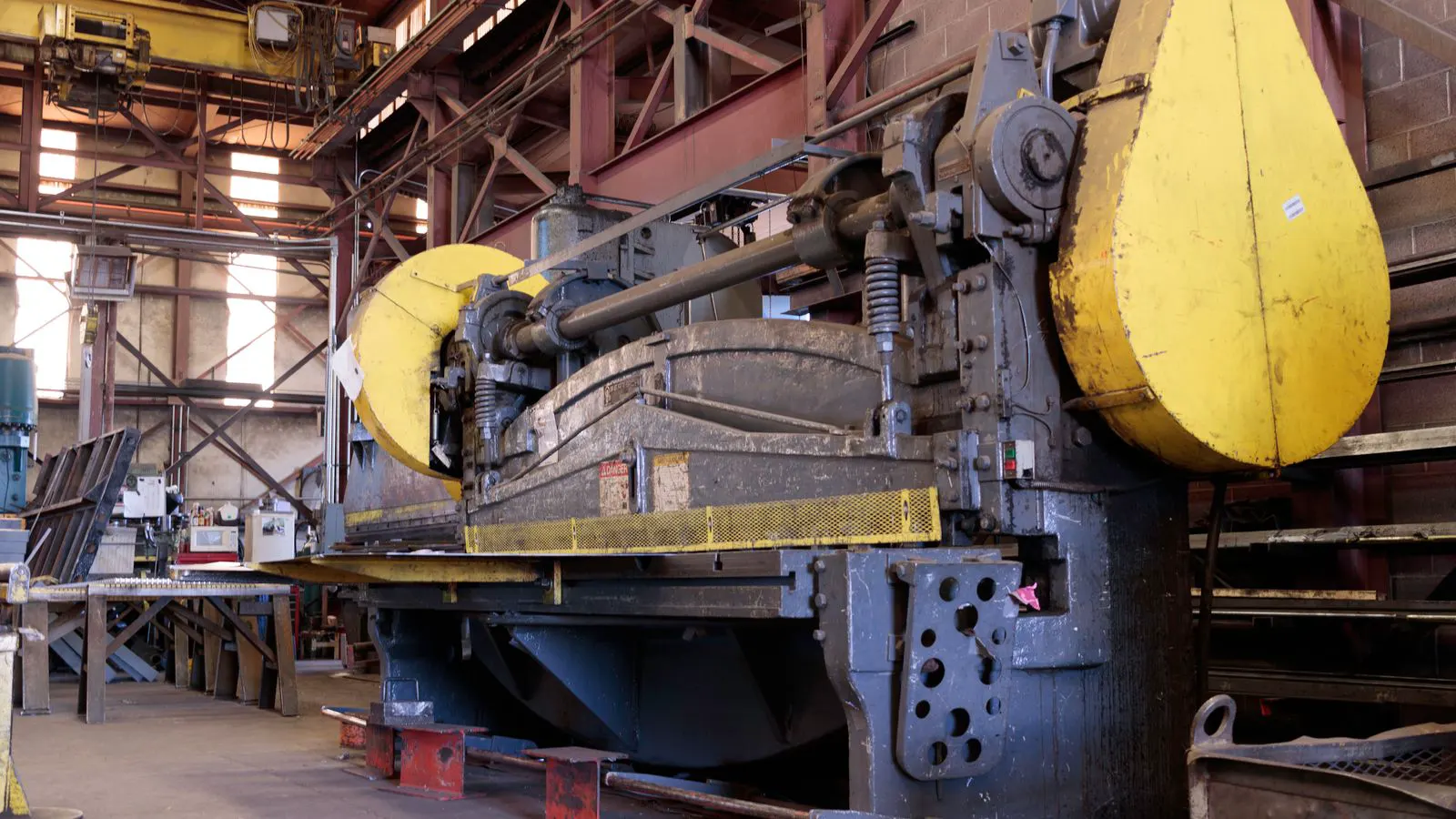
To calculate horsepower for mixed loads, determine peak and average power, then apply duty cycle factors. Continuous loads require full-rated capacity, while intermittent cycles allow temporary overloads. Matching the motor power rating to the specific cycle prevents overheating and extends equipment life.
- Continuous loads require a motor rated at or above the sustained power demand.
- Intermittent loads allow higher peak horsepower, but only within thermal limits.
- Duty cycle sizing depends on both peak demand and the time between cycles.
- Ambient temperature and cooling conditions directly affect the available thermal margin.
- Always verify the final selection against the manufacturer's duty cycle chart.
Why Standard Horsepower Rating Fails for Mixed Loads
Most industrial equipment does not run at a fixed load. A hydraulic press holds pressure for minutes, then cycles. A conveyor belt runs steadily but stops for maintenance. A batch mixer runs hard for ten minutes, rests for twenty, and repeats. If you select a motor based only on the peak horsepower, you overbuy. If you select based only on the average, the motor overheats.
The standard nameplate horsepower rating assumes a continuous thermal equilibrium. The windings and stator core reach a steady temperature where heat generation equals heat dissipation. That equilibrium is safe and stable. Intermittent duty changes this. The motor heats up during the run period and cools during the stop period. If the cooling time is short, the temperature never drops enough to reset the thermal state. The next run starts from a higher baseline, and the thermal stress compounds.
This is where horsepower calculation for continuous versus intermittent loads becomes a thermal problem, not just an electrical one. You must account for how long the load runs, how long it rests, and how much power it draws at each stage.
Prerequisites: What You Need Before Calculating
Before you apply any formula, gather these data points. Without them, any horsepower calculation is a guess.
- Peak load horsepower. This is the maximum power the equipment requires during the most demanding phase of the cycle.
- Average load horsepower. This is the power drawn over a full cycle, weighted by time.
- Cycle time. The total duration of one complete run-and-stop sequence.
- Run time. The portion of the cycle where power is applied.
- Stop time. The portion of the cycle where the motor is unloaded or off.
- Ambient temperature. The maximum expected air temperature in the motor enclosure.
- Ventilation conditions. Whether the motor is in a fan-cooled cabinet, an open machine, or an enclosed room with poor airflow.
You can often find peak and average values from the equipment manufacturer’s electrical schedule. If that document is missing, measure them. Use a power analyzer or a current clamp meter with a power meter function. Record the readings over at least three full cycles. Do not rely on a single snapshot.
Step 1: Determine the Continuous Power Demand
Start with the simplest case. If the load runs continuously, the motor must be rated at or above the sustained power. There is no thermal margin for a temporary overload. The windings heat up, and they stay hot.
Calculate the continuous power as the average power over an extended period. If the load fluctuates slightly, use the highest sustained value. For example, if a pump runs at 85 percent of its rated load for eight hours, the motor must be sized for that 85 percent demand. If the demand is 7.5 kW, you need a motor rated for at least 7.5 kW, plus any derating for high ambient temperature.
The reason for this step is straightforward. Continuous duty is the baseline. It sets the thermal floor. Anything else is an addition to this floor.
Step 2: Calculate the Duty Cycle
For intermittent loads, define the duty cycle. The duty cycle is the ratio of run time to total cycle time.
Duty Cycle = Run Time / (Run Time + Stop Time)
Express this as a percentage or a decimal. A motor that runs for 5 minutes and rests for 5 minutes has a 50 percent duty cycle. A motor that runs for 2 minutes and rests for 8 minutes has a 20 percent duty cycle.
The reason for this step is that the duty cycle determines how much the motor cools between cycles. A higher duty cycle means less cooling time. A lower duty cycle means more cooling time. The motor manufacturer uses this ratio to assign a specific overload capability.
Step 3: Apply the Intermittent Duty Factor
Now adjust the peak horsepower for the duty cycle. The exact factor depends on the motor manufacturer and the specific motor design. Different designs have different thermal masses and cooling characteristics.
A common approach is to use the manufacturer’s duty cycle chart. These charts show the maximum permissible output for a given duty cycle. For a 50 percent duty cycle, the chart might allow 125 percent of nameplate horsepower. For a 25 percent duty cycle, it might allow 150 percent or more.
The reason for this step is that the motor can tolerate temporary overloads as long as the thermal average stays within limits. The peak current is higher, but the heat does not accumulate as fast. The chart accounts for the physics of heat transfer in the stator and rotor.
If you do not have the manufacturer’s chart, use a conservative estimate. A general rule of thumb is to limit the peak power to 125 percent of the nameplate rating for cycles where the run time is 50 percent or more. For shorter run times, the margin can be larger, but only if the stop time is sufficient to allow meaningful cooling.
Step 4: Account for Ambient Temperature
Ambient temperature changes the cooling capacity of the motor. As the surrounding air warms up, the temperature difference between the winding and the air decreases. Less temperature difference means less heat transfer. The motor runs hotter at the same load.
High ambient derating is standard practice. Most industrial motors lose rating as the ambient temperature rises above the reference value, which is usually 40 degrees Celsius. Check the manufacturer’s derating curve. A typical curve reduces the rating by 1 to 2 percent for every degree above 40 degrees Celsius.
The reason for this step is that a motor selected for a cool room may overheat in a hot plant or an enclosed cabinet. If the motor sits in a machine with poor ventilation, the local air temperature near the windings may be significantly higher than the room temperature. In that case, derate for the local condition, not just the room average.
Step 5: Check the Torque and Starting Requirements
Horsepower is only one dimension of motor selection. You must also verify torque. A motor can be correctly sized in horsepower but fail if it cannot deliver the starting torque or the holding torque.
For intermittent loads, the starting torque requirement is often the same as for continuous loads. The motor must overcome static friction and accelerate the load. If the load is a heavy flywheel or a high-inertia component, the starting time is longer, and the thermal load during startup increases.
Check the torque curve. For standard induction motors, the torque at standstill is typically 150 to 200 percent of rated torque. If your application requires more, you need a different design, such as a wound rotor or a torque-boosted motor. The reason for this step is that a motor that can deliver the horsepower but not the torque will stall. A stalled motor draws high current and heats up rapidly, even if the average cycle load is low.
Step 6: Select the Motor Power Rating
Combine the findings from the previous steps. Start with the peak horsepower requirement from Step 1. Adjust it for the duty cycle factor from Step 3. Then apply the ambient temperature derating from Step 4.
The selected motor power rating must be at or above this adjusted value. Do not round down. If the calculation shows you need 10.5 kW, select the 11 kW motor. Do not select the 9 kW motor because it is cheaper. The 9 kW motor will overheat during the run period and fail within months.
The reason for this step is that the motor power rating is the thermal limit. It is the maximum sustained power the motor can dissipate without exceeding its insulation class. If you exceed it, the insulation degrades. If you exceed it repeatedly, the motor burns out.
Step 7: Verify Against the Manufacturer’s Duty Cycle Chart
The final verification step is to check your selected motor against the manufacturer’s specific duty cycle data. Every manufacturer has slightly different thermal characteristics. Some motors have larger thermal masses and can tolerate higher peak loads. Others have more efficient cooling and handle higher duty cycles.
Take the selected motor’s nameplate rating. Find the duty cycle chart in the technical datasheet. Locate your duty cycle on the chart. Read the maximum permissible output. Compare it to your required peak power. If the required power is above the chart value, select a larger motor.
The reason for this step is that the general rules are approximations. The manufacturer’s chart is based on tested data. It accounts for the specific winding design, the insulation class, and the cooling fan characteristics. Using the chart removes guesswork and aligns your selection with the manufacturer’s warranty conditions.
Common Mistakes in Horsepower Calculation
The most common error is using the average power for intermittent loads. The motor does not care about the average over an hour. It cares about the temperature during the run period. If the run period pushes the winding temperature above the limit, the motor fails, even if the stop period is long.
A second mistake is ignoring the stop time. If the stop time is too short, the motor never cools enough. The thermal state at the start of each cycle is higher than the previous one. After many cycles, the baseline temperature rises until the motor overheats.
A third mistake is neglecting ventilation. A motor in an open cabinet cools differently than one in a closed machine. The local air temperature near the motor can be 10 to 20 degrees Celsius higher than the room average. If you derate only for room temperature, you may underestimate the thermal stress.
A fourth mistake is assuming all motors are the same. A standard induction motor and a special design with a larger thermal mass are not equivalent. The special design may allow higher peak loads, but it is more expensive. Do not substitute a standard motor for a special design without checking the duty cycle chart.
Final Verification Step
Before you place the order, perform a final check. Write down the required peak power, the duty cycle, the ambient temperature, and the selected motor rating. Compare the selected rating to the adjusted requirement from Step 6. Confirm that the selected motor’s torque meets the starting requirement. Check the manufacturer’s duty cycle chart one last time.
If the numbers match, the selection is sound. If the numbers do not match, do not force the selection. Increase the motor size or reduce the peak load. A correctly sized motor for intermittent duty will run cooler, last longer, and cost less in energy over its life. A mis-sized motor will overheat, fail early, and require replacement.
The calculation is not a one-time exercise. If the operating cycle changes, or if the ambient temperature rises, recalculate. The duty cycle sizing is a living document. Keep it with the motor’s maintenance records. When a technician services the equipment, they should know the thermal limits.
Practical Example
Consider a hydraulic cylinder that drives a press. The press runs for 3 minutes, then rests for 7 minutes. The peak power is 15 kW. The average power is 9 kW. The duty cycle is 30 percent. The ambient temperature is 45 degrees Celsius.
For a 30 percent duty cycle, a standard motor might allow 140 percent of nameplate horsepower. If the motor is rated for 12 kW, it can handle 16.8 kW peak. This covers the 15 kW requirement.
Now apply the ambient derating. At 45 degrees Celsius, the rating may drop by 10 percent. The derated rating is 10.8 kW. The derated peak capacity is 15.1 kW. This is barely above the 15 kW requirement. There is no margin.
If you select a 12 kW motor, you are at the limit. A small increase in load, or a small drop in ventilation, will cause overheating. A safer selection is a 15 kW motor. At 15 kW, the derated peak capacity is 18.9 kW, which leaves a healthy margin. The 15 kW motor will run cooler and last longer.
This example shows why the calculation must include all factors. The average power of 9 kW would suggest a 7.5 kW motor is sufficient. That would be a fatal error. The peak power and the short stop time dictate the size, not the average.
Conclusion
Horsepower calculation for continuous and intermittent loads is a thermal exercise. You must balance peak demand, cycle time, and cooling conditions. Continuous loads require a motor rated at the sustained power. Intermittent loads allow higher peak power, but only within the thermal limits defined by the duty cycle.
Use the manufacturer’s duty cycle chart. Do not rely on general rules alone. Derate for ambient temperature. Check torque. Verify the final selection. A correctly sized motor for intermittent duty is more reliable and more economical than a motor that is too small.
The method is straightforward. The execution requires discipline. Gather the data, apply the factors, and verify against the manufacturer’s data. Do it every time. Do not skip the verification step. The motor will not forgive a shortcut.
Frequently asked questions
Can I use a standard motor for a 100 percent duty cycle with high ambient temperature?
You can, but you must derate the motor for the ambient temperature. A standard motor may need to be sized up to maintain safe winding temperatures in a hot environment.
How do I measure the average load horsepower for an intermittent cycle?
Use a power analyzer or a current clamp meter with power measurement. Record the readings over at least three full cycles and calculate the time-weighted average.
What is the difference between duty cycle and service factor?
Duty cycle describes the run and stop times of the load. Service factor is a multiplier that allows a motor to handle temporary overloads above its nameplate rating for a defined period.
Should I select a motor based on peak horsepower or average horsepower for intermittent duty?
Select based on peak horsepower, adjusted for duty cycle and ambient temperature. The average horsepower alone does not account for the thermal stress during the run period.
Does the insulation class affect the duty cycle selection?
Yes. A higher insulation class, such as class F or H, allows higher operating temperatures. This can increase the thermal margin and potentially allow a slightly smaller motor for the same duty cycle. Check the manufacturer's data for the specific class.